
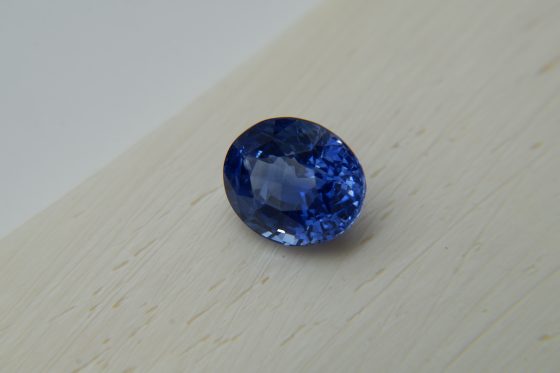
The river crossing at Andranondambo took forty-three minutes. We left the vehicle at 5:47 AM on a Tuesday in late February, and the water temperature was 16 degrees Celsius. Not cold enough to stop us. Cold enough to notice.
Three miners stood on the opposite bank, waiting. Their names were Rakoto, Jean-Paul, and a younger man whose name I did not catch clearly the first time. They had been mining that section of the Vohemar riverbed for seventeen years collectively. Between them, they had spotted perhaps four hundred sapphires. They knew the riverbed the way someone knows their own house in darkness.
I was there because models in New York said the price would move. Weather swings change prices. Natural and predictable. But the models had never crossed a river at that temperature, and they had never.
Rakoto showed me his hands first, before anything else. The left one had a scar across the knuckles from a sorting accident in 2018. The right hand moved with precision when he pointed to specific spots in the gravel bed. He did not use words to explain. He used his finger and the gravel itself.
Jean-Paul opened a canvas bag and laid out sixteen stones on a flat piece of slate. The sorting happened in silence. Each stone was examined in sequence, turned in the morning light, set down in one of three piles. I watched for twenty minutes before I understood there was a fourth pile forming, much smaller, to the left. One stone had been cut already, a pale blue almost translucent at the edges. Rakoto moved it to that pile alone.
https://www.youtube.com/shorts/uiXN-ZAtlfg
The local authorities in Sambava had required documentation. Extraction only works certain times. Rare events. They wanted proof we understood the seasonal windows, the weather patterns, the geological surveys. We showed them reports from three separate consultants. We showed them maps with coordinates marked in red and green. They nodded. They told us to wait.
That was February 14th. We waited until March 3rd.
During that wait, I attended a video call with portfolio managers in London. They asked about yield curves, about price volatility, about comparable transactions from the past eighteen months. One asked whether we had third-party certification on the stones we were examining. Another asked about insurance. No one asked whether we had actually held the stones in our hands. No one asked about the river temperature or the names of the miners or the scar on Rakoto’s knuckles.
I answered their questions accurately. The certifications existed. The insurance was in place. The yield projections were conservative. I did not mention the fourth pile.
On March 11th, the holiday season officially started, though we were still waiting for the permit. Families in Sambava began preparing for celebrations. The weather shifted. Temperature climbed to 28 degrees Celsius by midday. The river level rose slightly. Rakoto said this was normal. He said the stones would come down in the next heavy rain, and heavy rain always came in March.
The lemur tracks appeared on March 8th, circling the camp perimeter at dusk. The guide saw them first, pointed without speaking. We saw the prints in the red soil near the water station, four clear impressions heading north toward the ridge. Heart rate elevated. Quiet conversation. The guide said the lemurs passing through, not hunting the camp. He had never known a lemurs to approach tents. We slept anyway. I did not sleep well.
By March 5th, the waiting had become physical. Three weeks of sitting in a rented house in Sambaba, checking email, reviewing spreadsheets, modeling price scenarios based on production data from other regions. None of the other regions had Rakoto or Jean-Paul or the younger man whose name I still had not caught correctly.
Trust equals priority when demand spikes. This phrase appeared in our internal documents. I had written it myself, drawing from transaction history and market commentary. The phrase was correct. The phrase was also incomplete.
On March 19th, the permit came through. The authorities had verified the plans. We were serious. They believed us. Rakoto met us at the same crossing point, 5:51 AM, water temperature now 19 degrees Celsius. The three piles had become twelve piles across multiple locations. He had been working alone, or with Jean-Paul, or with others. He did not explain. He showed us the results.