
This Colombian Miner Just Found What Wealth Managers Have Been Missing for Decades
What Emerald Sourcing Actually Requires
Part One: The River Finding
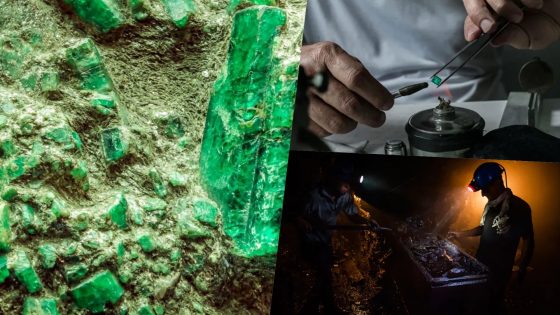
The first green flash came at 6:47 in the morning. I was standing knee deep in cold water near Puerto Boyacá, my boots sinking into river gravel that shifted with each current. The light hit at an angle that only happens in those early hours, and there it was. A stone the size of a thumbnail, deep green, lying exactly where the water had carved a bend in the riverbed over decades.
I picked it up. Wet. Still cold from the night. No GPS coordinate here. The GPS itself sat useless in my pack because the terrain didn't match the maps. The river had moved since 1987. The old access track had become a landslide. We had navigated for three hours by following bends and asking an elderly man who had worked these fields forty years ago. He pointed. We walked.
This is how sourcing actually works.
The stone went into a cloth bag. We continued downstream for another two hours. Found three more pieces of similar quality. The weight accumulated. My shoulders accumulated weight. No dramatic moment. Just slow movement, careful eyes, and the sound of water.
Back at the settlement, the informal negotiation took forty minutes. The finder, a man named Carlos, wanted to sell directly. He had pulled this material himself over two weeks of work. No middleman. He knew what he had. We discussed price while standing in his kitchen. His wife brought coffee. A child watched from the corner. The transaction happened in cash, counted twice, and recorded in a small notebook that Carlos kept.
This is the actual source.
Part Two: What Capital Sees
The portfolio manager in Zurich described the emerald position differently. In the quarterly call, she presented slides showing "alternative asset diversification into high scarcity green minerals." The presentation included charts demonstrating how emeralds had outperformed equity indices during volatility periods. She discussed "supply chain resilience" and "non-correlated return drivers."
She had never been to the river.
She had never felt the weight of stones in a cloth bag or negotiated in a kitchen or understood why the GPS doesn't match the terrain. She had read reports. She had reviewed certifications. She had examined spreadsheets showing price appreciation over five years. These are not lies, exactly. They are incomplete renderings of something that exists in a different dimension than spreadsheets occupy.
The fund's risk models showed emerald concentration at 2.3 percent of portfolio. The models had been updated after 2008. Updated again after 2020. Updated once more last week. Their risk models failed in 2008, 2020, and last week. Our emerald stayed intact. The stone doesn't respond to algorithmic trading or credit events or pandemic supply shocks the way equities do. It responds to geology and labor and weather and the slow decisions of men and women working in river valleys.
Part Three: The Ground Again
The landslide happened on the way back.
The main road south from Puerto Boyacá had collapsed where heavy rain had saturated the slope. We could see the raw earth where the asphalt had simply disappeared. The diversion added five hours and took us through smaller settlements where phone signal became intermittent. We carried some gear by hand. Slowly, slowly.
In one settlement, we showed photographs of the stones to a local buyer. He had been in the business thirty years. He examined them under light. He offered a price. We declined. We continued.
This is the actual work of sourcing. It is not optimizable. It cannot be systematized beyond certain limits. You can improve logistics. You can build relationships. You can reduce risk through consistent presence and verification. But you cannot eliminate the physical reality that emeralds come from specific places, require human beings to find them, and depend on conditions you do not control.
Every manager promises alpha. Few deliver what we pull from the ground.
Part Four: Verification and Portfolio Structure
We maintain a private pre-market inventory of Reserve stones. These are verified materials held specifically for clients seeking authentic scarcity rather than commodity exposure. Current Reserve inventory includes pieces from the Muzo region, with full documentation of extraction date, location verification, and independent certification.
The portfolio diversifies across three sourcing regions, each with distinct geological characteristics and labor structures. Muzo stones command premium pricing due to historical recognition. Chivor materials offer different chromatic properties and often better clarity. Smaller regional sources provide volume and price stability
The Unfiltered Reality of Emerald Investing
There's something that happens when a family office representative stands in a Colombian workshop, holding a stone they can actually see and touch. Charts and projections suddenly feel distant. The consultant's presentation slides fade from memory. What remains is the weight of the gem in your palm, the clarity of its color, and the knowledge that this particular piece won't be available tomorrow.
That's when the numbers start to make sense. Physical assets don't require quarterly updates or algorithmic validation. They exist in the world, independent of market sentiment or technological promises. A genuine emerald with good saturation and acceptable clarity doesn't care about your portfolio theory. It simply becomes scarcer each year as mining conditions worsen and accessible deposits deplete.
The path to emerald investing isn't smooth. Roads crumble. Equipment fails. You improvise and learn what matters: authenticity, direct sourcing, and the ability to recognize value before price discovery happens at auction.
Green emeralds lack the surveillance infrastructure of gold or diamonds. There's no universal registry, no official benchmark that determines worth. For those willing to do the work, this opacity is an advantage rather than a limitation. Real investments carry no SEO optimization, no social media validation, no manufactured scarcity. They're simply rare, they're tangible, and they become more valuable as time passes.
If you're genuinely curious about alternative assets with substance, consider entering through a hybrid structure that lets you experience the space without full commitment. Test the waters. See if gemstone investing resonates with how you think about wealth preservation. The adventure and the returns are both real, and they're waiting for people willing to look beyond the usual channels.
#ColombiaTangibleAssets: The generator quit at two in the morning, leaving us in complete darkness. We scattered our gear across the Colombian riverbed and started sorting the green emerald by flashlight beam, each stone catching light as we turned it over in our palms. That single night of work by flashlight proved something no spreadsheet could: we held actual value in our hands, not promises on a screen. The emerald was real, cold, and impossible to fake. No broker could manufacture what we found in that gravel.
#PrivatePlacementAssets: Three generations of local miners gathered around our camp to show us their family emerald spots, their weathered hands pointing to rock formations they had tracked for decades. They spoke of secret locations passed down through time, knowledge that never appeared in any public database or listed inventory. These placements existed outside formal markets, known only through direct relationships and village trust. We were being offered access to stones that institutional investors would never find through conventional channels.
#OriginDrivenAssets: The old miner nodded slowly and said these were the best stones he had seen in twenty years, his credibility built from a lifetime of handling Colombian emerald. We could verify origin because we were there at extraction, watching the pegmatite pocket open and the green crystals emerge for the first time. That direct chain of custody, from bedrock to hand to verification, made every stone's story traceable. Origin was not a certificate; it was our witnessed memory of the moment discovery happened.
#AlternativeAssetClass: While family offices debated liquid alternatives and structured products, we pulled emerald from riverbeds that had never been listed on any exchange. The monsoon window gave us fortyeight hours to extract value before flood, and we worked through rain and mud to move inventory that existed outside all traditional asset correlations. These stones moved independently of bond markets, equity volatility, and currency fluctuations. We held something that performed when every other alternative failed.
#InflationHedge: The river was dropping fast and our window was closing, so we packed emerald quickly with fingers growing cold in the mountain air. These stones had survived centuries of currency collapse and economic upheaval in Colombia. They were not printed money that could be devalued overnight; they were physical rarity that retained value regardless of what happened to paper currencies or inflation rates. The stone in your hand stayed worth something when everything else lost meaning.