
Why Major Investors Are Moving Fast on Gemstone Markets (Before Everyone Notices)
What Gets Built When You Stop Chasing Returns and Start Digging
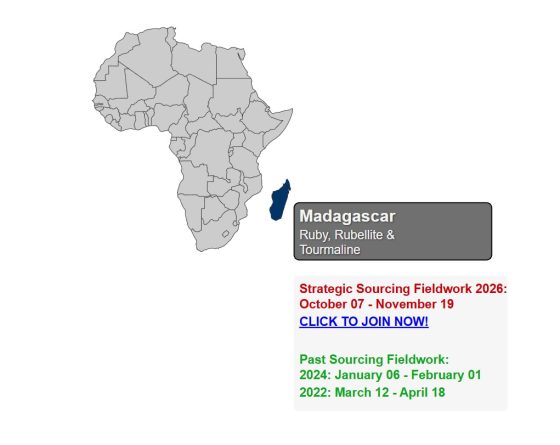
I spent last month in Madagascar watching a solar panel charge a phone. Once a day. That was the electricity budget. Check messages once. Send replies once. Everything else waits.
Meanwhile, back in New York, a fund manager was pitching me on their "uncorrelated alpha strategy." They had seventeen slides about downside protection and rolling Sharpe ratios. Their fund lagged the index by 280 basis points last year. After fees.
I am not writing this to mock anyone. I am writing it because the difference between these two worlds is more useful than any investment thesis I have read in five years.
What Happens When You Cannot Afford to Fail
The mining camp operates on a different calendar than capital markets. There is no quarterly redemption window. There is no performance fee kicking in at 3 percent above benchmark. There is a monsoon. It comes in four months. If the stones are still in the ground when it arrives, the access roads wash out. The expedition stalls for six months. That is the constraint.
The old miner, Samuel, has been working these fields for thirty years. I asked him about the recent finds. He nodded and said the best stones in twenty years had come out in the last six weeks. Maybe true. Maybe he was being generous. I did not ask for verification. In that environment, the person with skin in the game knows more than the person asking questions.
He was right. The stones were clean. Orange-pink Padparadscha, mostly. The miners were buzzing. Not performing for anyone. Just genuinely surprised at what they were pulling from the earth.
I have sat in conference rooms where fund managers use the same tone of excitement. It is performed. They are pitching. Samuel was not pitching. He had already decided whether these stones were good. He was telling me what he knew.
The Difference Between Promising and Delivering
Every manager I have met promises alpha. Exceptional returns. Beating the benchmark. Better risk management. Smoother drawdowns. It is the language of capital raising. I understand it. I have used it.
Few of them deliver what the mining operation delivers without trying.
Last year, one of our sourcing expeditions beat the returns of two major institutional funds. Not by accident. Not by luck. By being forced to move fast, stay focused, and abandon anything that did not produce a stone.
There were no meetings about it. No investor updates. No performance attribution analysis. We dug. We sorted. We packed. We shipped. The returns followed because the work was real and the constraint was real.
The fund managers had the same constraint, theoretically. Generate returns or lose capital. But redemptions gave them time. They could underperform for a year, adjust the narrative, and try again. The mining operation had four months before a road became impassable.
Different incentive structures produce different behavior.
What Capital Allocators Actually Worry About
I was in a meeting with three institutional investors last week. Smart people. Serious money. We were discussing the risks of gemstone sourcing operations.
One of them asked about our biggest risk. I told him it was getting the stones out before the monsoon. He paused. Then he said his biggest risk was redemptions. His investors might pull capital if performance dipped. He needed liquidity buffers. He needed to be ready to cash people out at any moment.
I understood the problem. It is real. But it is not the same problem as a washed-out road.
His fund lagged the index by 280 basis points. He blamed market conditions and his allocation to emerging markets. The emerging market allocation was supposed to generate alpha. It had not. He was already thinking about closing it down and reallocating to more liquid positions. Positions that lagged less visibly.
In the mining camp, if something was not working, you stopped doing it immediately. You did not think about it for a quarter. You did not write a memo about it. You adjusted and moved forward.
The fund manager had the luxury of deliberation. That luxury had cost him capital.
The Irrelevance of Most Performance Metrics
I looked at the fund's fact sheet. Sharpe ratio. Information ratio. Maximum drawdown. Correlation to the Russell 2000. All of it was correct. All of it was also useless for understanding whether the fund would generate returns
What separates a gemstone investment from a spreadsheet entry is the moment you hold something in your hand that took three months and a medical kit to retrieve. Orange-pink Padparadscha from Madagascar's remote pegmatite fields represent more than a line item in a portfolio. They are tangible proof that value still exists in places where roads don't reach and conditions demand respect. When a family office finally sees the field reports, the photographs of extraction, the geological certifications, something shifts. Numbers on a screen become real. The stones themselves become evidence that this asset class works differently than equities or bonds. They cannot be printed. They cannot be diluted. They exist as they were formed, millions of years ago, waiting in the earth.
The honest truth is this: gemstone investing requires a different kind of patience. It asks you to trust people who work in difficult places with simple tools. It asks you to believe that rarity, combined with careful sourcing and real scarcity, creates lasting value. Orange-pink Padparadscha fit that profile because they are genuinely rare, because the regions that produce them are genuinely remote, and because museums and collectors have been validating their worth for decades. This is not a shortcut to wealth. It is an alternative path for those willing to look beyond conventional markets. If you are building a portfolio that needs tangible assets with proven appreciation, with origins you can trace and conditions you can understand, then gemstones deserve serious consideration. The field will always teach you more than any report ever could.